
Chicago Tribune
February 29, 2004 Sunday
Chicago Final Edition
HEADLINE: TRISTAN MEINECKE, 88;
Chicago artist, architect, musician
BYLINE: By Hal Dardick, Tribune staff reporter.
Longtime Chicago artist Tristan Meinecke defied categorization, whether by genre, movement or temperament. "He never wanted to be categorized or pigeonholed," said his son Bradford. "He was one of a kind, to say the least."
Mr. Meinecke, 88, a self-described "experimentalist," died of heart failure Wednesday, Feb. 25, in St. Francis Hospital in Evanston. He was born in Atchison, Kan., and raised in the Ann Arbor, Mich., area. In many ways he took after his father, Bruno Meinecke, a prominent Latin scholar at the University of Michigan who also conducted symphonies.
At 11, Mr. Meinecke "drew virtually photo-realistic faces," his son said. After studying art at the University of Michigan from 1938 to 1942, he moved to Chicago in 1943.
Mr. Meinecke, who played the clarinet and saxophone, performed in the first professional interracial (Black & Tan as the saying went) jazz band in Chicago, his son said.
At the old Ballantine's restaurant in Chicago, Mr. Meinecke met Lorraine Johnson, a TV actress and television pioneer, who starred in a children's show using the stage name Angel Casey. The couple married in 1947.
In the 1940s and '50s, Mr. Meinecke focused on painting, the artistic medium he was most interested in throughout his life, said John Corbett, a teacher at the Art Institute of
Chicago who curated a retrospective of Mr. Meinecke's work called "Tristan Meinecke: A Cantankerous Imagination."
Mr. Meinecke did both realistic and abstract painting,
setting him apart from other artists "in a time when people
were forced to choose between abstraction and figuration," Corbett said. In the mid-1950s, Mr. Meinecke created "split-level paintings," which have canvas surfaces with one painting style cut away to reveal other painted images in another style underneath.
In the 1960s and '70s, Mr. Meinecke and architect Robert
Bruce Tague ran Meinecke Studio, an architecture firm. They built houses, apartments and commercial structures in contemporary styles.
Mr. Meinecke also wrote classical music "that had a lot of
dissonance, just like his paintings," his son said.
Another art genre Mr. Meinecke took on was writing.
A short story called "Sherwood Walk Straight" is being prepared for publication next month in the journal Parakeet, Corbett said. The story, written not long after Mr. Meinecke moved to Chicago, is about his wonder at the big city, Corbett said. (susequently published in Parakeet.)
In addition to his wife, Mr. Meinecke is survived by
two sons, Bradford and David Scott; and eight grandchildren. (Melissa, John, Ryan, Kyle, Philip, Lucas, Barbara and Katie) and one great grandaughter (Emily)
Visitation will be held from 1 to 6 p.m. Sunday in Nelson
Funeral Home, 5149-51 N. Ashland Ave., Chicago. A funeral will be held at 11 a.m. Monday in the Lutheran Church of St. Philip, 2500 W. Bryn Mawr Ave., Chicago.

The Last Studio in 2004
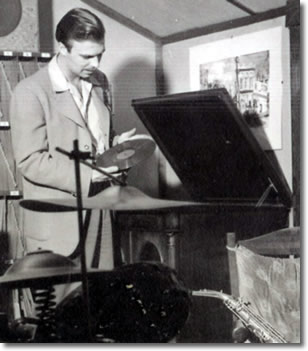
Tristan Meinecke
rebelles esse ad mortem
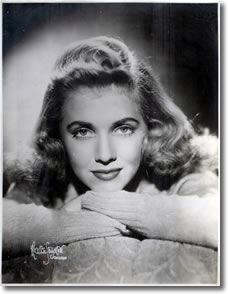
They Loved each other for over 50 years
fidelis usque ad mortem
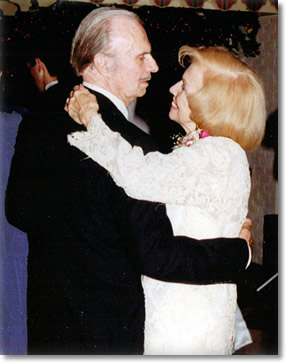
Tris and Angel
An American Love Story
